
WELCOME TO
Dilston Tree Surgeons
PREMIER TREE CARE
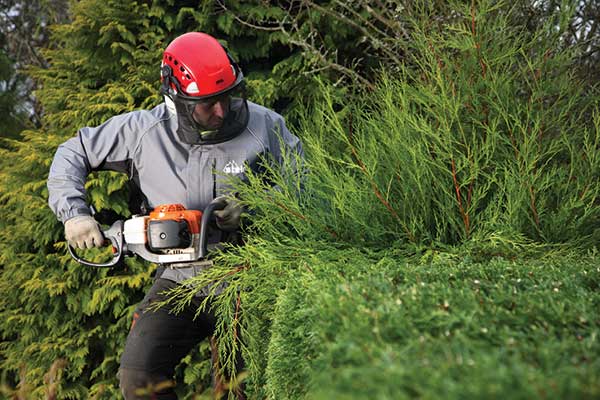
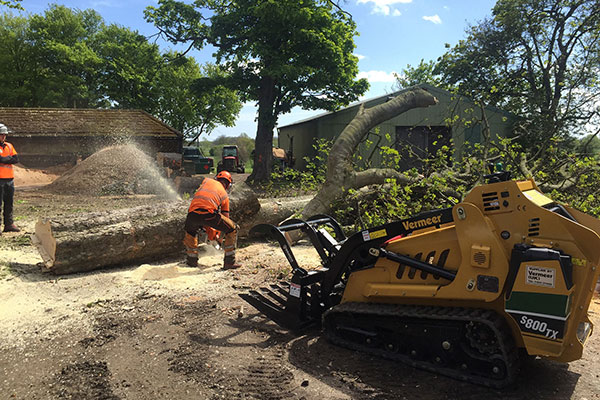
Dilston Tree Surgeons provide tree maintenance services such as pruning, planting & aftercare, felling, advice & guidance. We are dedicated specialists in the preservation and maintenance of trees. We believe in offering the most cost-effective solutions for the long-term management of your trees.
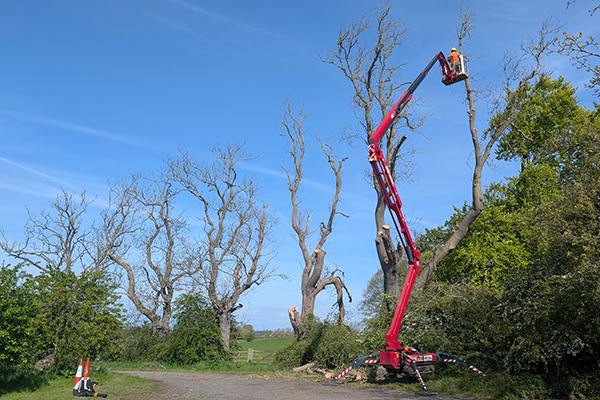
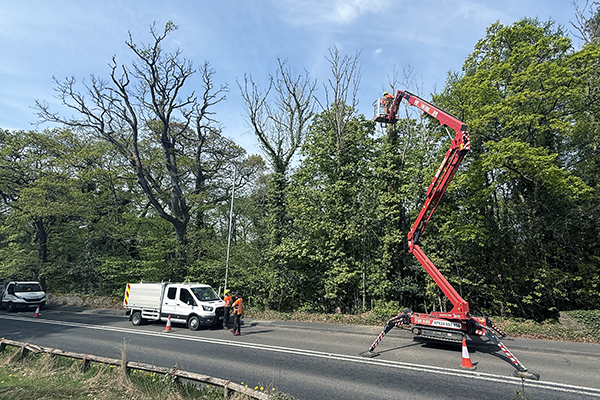
We operate tree surgery throughout the North East of England. We have a qualified and experienced management team, together with highly skilled operational Arborists who can deliver a superb service offering excellent value for money.
All our tree works are conducted to completely satisfy the requirements of BS 3998 (2010) and comply with industry best practice and current Arboricultural standards.
Our Services
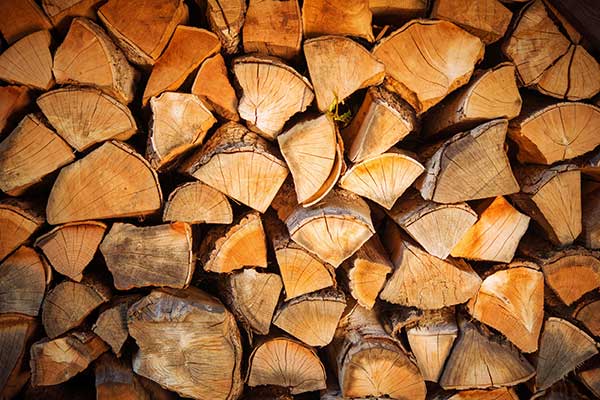
HARDWOOD LOGS FOR SALE
Our hardwood logs are sold by volume not weight, this means you get the same amount every time.
Our hardwood logs are delivered loose and not in bags unless otherwise agreed. If you require a certain size log to fit your stove/fire then please call Chris to make a special request. (Prices may vary).
FAQs
Can I get my neighbours to cut back or reduce the height of their trees or hedge?
In most situations the simple answer to this is no. You have a common law right to prune back parts of a tree or hedge growing over the boundary into your property (subject to any legal restrictions being overcome first such as Tree Preservation Orders or conservation areas) but you cannot compel the owner of the trees or hedge to carry out this work or pay for it. As a general rule you have no legal right to a view which has been obscured by your neighbours trees.
If your neighbours own an evergreen hedge close to your property you can make a formal complaint to your Local Planning Authority (LPA) under the High Hedges legislation as set out in Part 8 of the Antisocial Behaviour Act 2003. There is usually a charge for this and the LPA will consider the complaint using standard government guidance set out in a document called Hedge Height and Light Loss. If your complaint is successful the LPA will determine an Action Height to which the height of the hedge must be reduced.
If your neighbours tree or hedge is dangerous and is a hazard to your property then there is action that can usually be taken. In this situation you should contact an arboricultural consultant for further advice. It is always better to settle a dispute about trees amicably and it is recommended that you try to resolve it by talking to your neighbours first.
Further information: AA Tree Protections Brief Guide, Over the Garden Hedge (DCLG website), Hedge Height and Light Loss (DCLG website)
How close can I build to my tree?
If the building work proposed requires planning consent, all trees which could potentially be affected by the development (including those off-site) should be assessed by an arboricultural consultant in accordance with British Standard BS5837:2005 Trees in Relation to Construction – Recommendations, and details of this submitted to the Local Planning Authority with the planning application. This assessment will consider tree condition, dimensions, likely retention span (years), and future growth potential, and will inform design in relation to how close you can build to trees. If the tree is to be retained, constraints to be considered are those below ground and above ground. The below-ground constraints are dictated by the root protection area (RPA) the calculation of which is based on the stem diameter; the above ground constraints are dictated by the height and spread of the tree, future growth potential, shading potential and what you are proposing to construct.
If the work proposed does not require planning consent, it is advised that you still have the trees assessed in accordance with BS5837:2005 to inform good design. If your tree is protected by a tree preservation order (TPO) or is located within a conservation area, legislation relating to tree protection overrides that of permitted development rights, and you risk prosecution if protected trees are damaged. You will require the services of an arboricultural consultant to assist you with these matters.
Further information: BS5837:2005 Trees in Relation to Construction – Recommendations, AA Tree Protections Brief Guide
What should I do if tree roots cause cracks in my driveway or drains and does it mean that my house will be damaged next?
Tree roots typically grow close to the surface, and it is not uncommon for them to develop on the underside of hard surfaces such as driveways, which can lead to cracks developing through physical pressure. This damage is frequently superficial, and there is a range of options available which include: do nothing; repair the cracks; remove the existing surface and replace with a new one engineered to accommodate the roots; prune the roots or remove the tree (the latter two subject to Tree Preservation Order consent or conservation area notification if relevant).
Tree roots can cause problems by blocking drains. They do not usually cause the initial damage to the drain and will only enter drains which are already damaged and leaking. Therefore, if drains are watertight, roots should not normally affect them. If your drains are blocked by roots you will need a drainage company to assist. It is possible that the drains will require lining or replacing. Removing the tree seldom resolves the problem as the drain remains damaged and can leak (possibly causing foundation damage) or may be infiltrated by the roots of other plants unless the drain is repaired.
If your driveway or drains have been affected by roots, this does not necessarily mean that your house will be damaged next. Root damage to buildings is much rarer and is usually caused by subsidence: an entirely different mechanism to driveways and drains damage.
Further information: Tree Roots in the Built Environment 2006 (DCLG), Building Research Establishment publications
How close to my house should a tree be?
In spite of what you may read in newspapers or be told by insurance companies, there are no fixed minimum recommended distances that you should plant trees of certain species from buildings.
When choosing a tree or trees to plant, you should give careful consideration to design, in particular how they will fit with their surroundings when they have reached their mature size. Young trees are frequently planted in spaces which are too small to allow them to grow to maturity, and a consequence of this is that they may be disliked as they develop, frequently resulting in heavy pruning or removal. Consequently, it is important to consider the ultimate size of the tree when choosing what and where to plant.
If you live in an area where there is heavy clay soil it is possible that trees in close proximity to buildings may cause structural damage to them by causing soil shrinkage which can lead to downward movement called subsidence. This is rare and cannot easily be predicted and there are many factors which affect it including the nature of the soil, tree characteristics, foundation design and climate. In areas of heavy clay soil where building foundations are known to be shallow this issue should be considered when deciding where to plant trees and how to manage existing trees – further advice should be sought as necessary.
Further information: Tree Roots in the Built Environment 2006 (DCLG)
All Enquiries:
Please complete the form below and we will get back to you.
Accreditations: